High Level Scope of (PRA) Module
Predictive Analytics (PRA)
With Projense, forecast trends, identify risks, and make data-driven decisions through intelligent analytics—ensuring accuracy, efficiency, and business growth.
Let’s innovate together!

High Level Scope of (PRA) Module
With Projense, forecast trends, identify risks, and make data-driven decisions through intelligent analytics—ensuring accuracy, efficiency, and business growth.
Let’s innovate together!
The Projense Predictive Analytics (PRA) module is your organization’s intelligent insights layer — enabling data-driven forecasting, trend analysis, and risk identification across business functions, processes, and decision-makers.
Projense Systems PRA ensures data patterns, performance indicators, and predictive models are analyzed accurately, monitored continuously, and translated into actionable insights — reducing uncertainty and enabling smarter, proactive business decisions.
Anticipate outcomes and optimize strategies with advanced predictive analytics
Facilitate informed collaboration through real-time predictive insights
Minimize risks and delays through proactive, predictive insights and early detection
Gain complete visibility into forecasts, risks, and business performance
This flowchart provides a clear view of how Projense Systems Predictive Analytics (PRA) collects, analyzes, and interprets data — enabling accurate forecasts and informed decision-making at every business touchpoint.
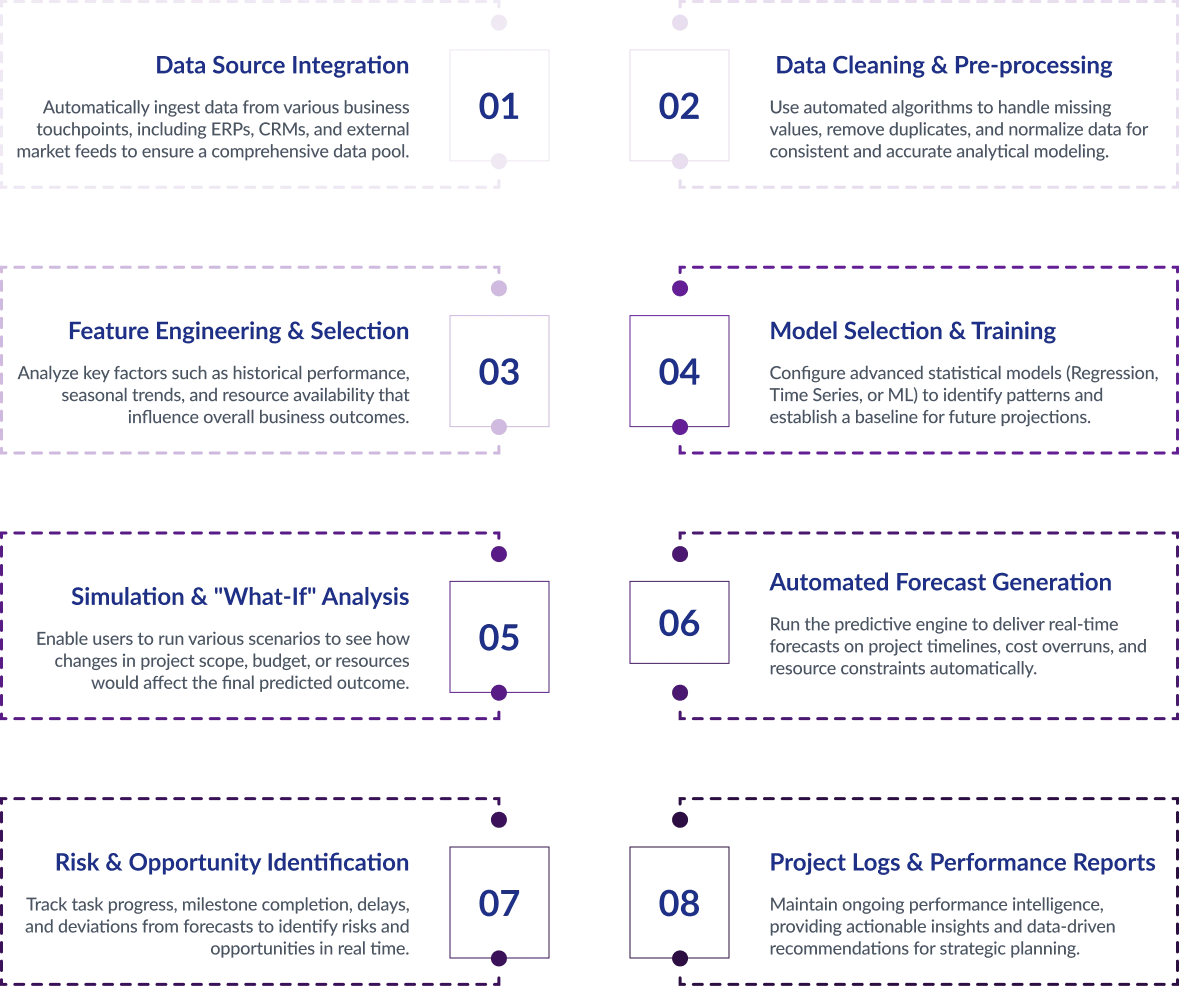
Project / Event Trigger → Project & Task Template Selection → Team & Resource Mapping → Timeline & Schedule Setup → Approval (Optional) → Automated Task Execution & Updates → Project Status Tracking → Project Logs & Performance Reports
Projense Predictive Analytics (PRA) transforms raw data into forward-looking insights, giving organizations clarity beyond historical reporting.
The PRA module continuously evaluates trends, patterns, and signals to support smarter forecasting and proactive decision-making.
By enabling early visibility into risks and opportunities, PRA helps teams act faster, reduce uncertainty, and achieve stronger business outcomes.

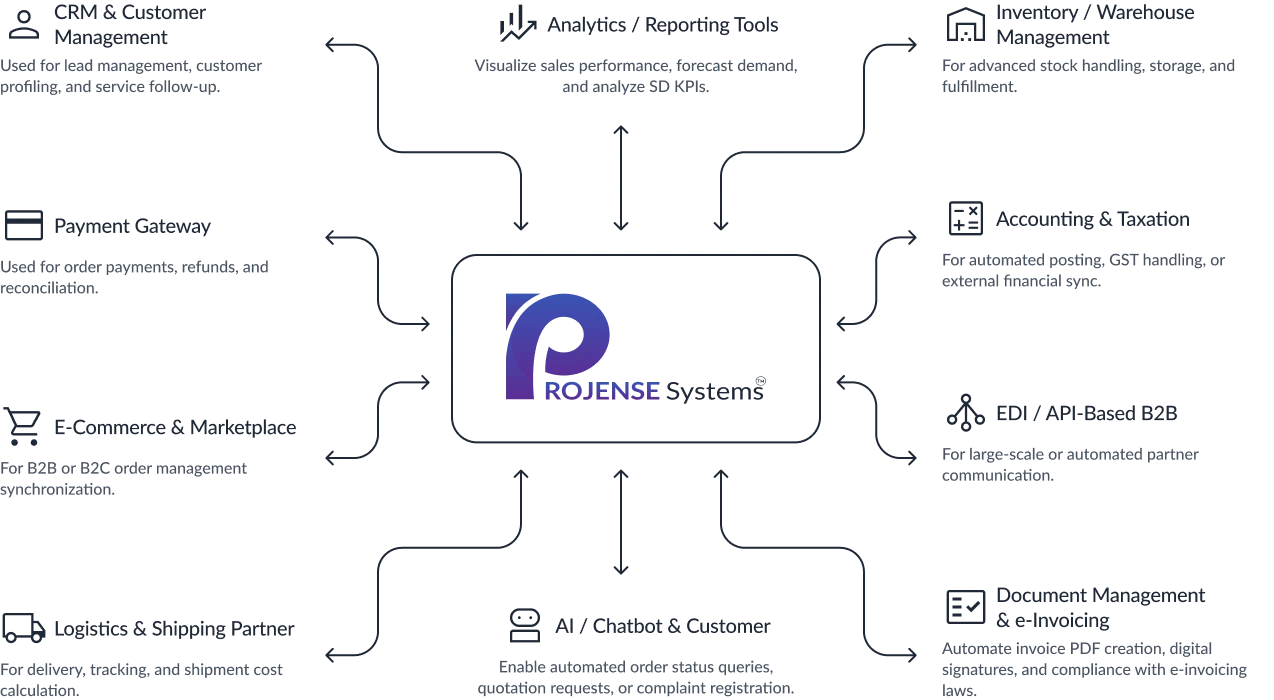
A third-party integration is a connection between two or more applications built on an external platform. It extends the capabilities of the core system by allowing external applications, services, or platforms to seamlessly interact with key business processes—such as sales, billing, logistics, and customer service—thereby enhancing overall functionality and efficiency beyond the standard ecosystem.